
9 November 2026
Edge-to-Edge Screen Protection: Why the Frame Matters
A tempered-glass protector is judged at the edges. Here is how cutting, framing, coating and alignment turn a sheet of glass into a finished part.
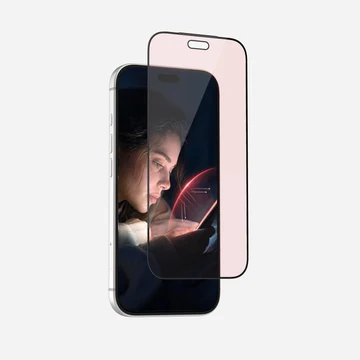
Most of a screen protector is plain in the middle. The part that decides whether it feels like part of the phone is the edge — how it meets the frame, how the border is finished and how it lands on the glass the first time.
Step one: cut to the frame
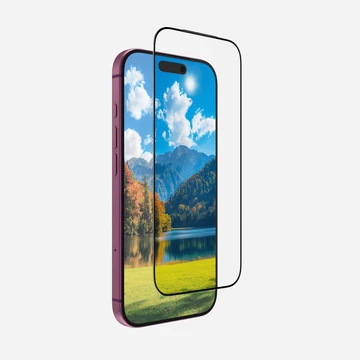
The Mag Glass protector is cut to reach the frame without leaving a band of exposed glass around the display. That means the edges have to follow the phone's outline closely, not a generic rounded rectangle.
Step two: finish the border
A black silk frame hides the edge line and keeps the surface visually flush with the phone. The same idea runs through our AR and eye-comfort lines, where the border is part of the product rather than a leftover margin.
Step three: coat after polishing
The oleophobic coating goes on after the glass is polished, so it lasts longer than a spray-on layer applied earlier in the process. A 2.5D rounded edge completes the border, meeting the frame without a sharp lip under the thumb.
Step four: align before contact
An alignment applicator lines the protector up before it touches the screen, so the first attempt is the only attempt. This matters most for edge-to-edge parts, where a millimetre of drift shows at the border.
What buyers can specify
Tempered glass, anti-reflective glass and a red-light eye-comfort option are available in the same edge-to-edge construction, with private-label packaging for retail programmes.
Need the product behind this story?
Ask our team